Selecting the Right Concrete Leveling Remedy: Contrasting Mudjacking and Polyjacking for Your Needs
Picking the ideal concrete progressing option calls for careful factor to consider of different aspects. Mudjacking and polyjacking each offer distinctive advantages and drawbacks. Comprehending the procedures, costs, and viability for specific scenarios is necessary. In addition, long-lasting longevity and upkeep effects play a significant function in the decision-making procedure. With these components in mind, one must evaluate their choices thoughtfully to establish which technique aligns finest with their concrete repair service requirements.
Understanding Mudjacking: Process and Benefits
Although various concrete progressing approaches exist, mudjacking continues to be a popular choice due to its effectiveness and cost-efficiency. This approach includes injecting a blend of water, dirt, and concrete beneath sunken concrete pieces, raising them back to their initial height. The procedure begins with piercing small holes into the influenced concrete, followed by the cautious insertion of the mudjacking slurry, which loads spaces and supports the structure.
One of the primary advantages of mudjacking is its price compared to other leveling solutions, making it available for lots of home owners. In addition, the method typically requires minimal interruption, permitting fast fixings without substantial excavation. The durability of the mudjacking material additionally adds to resilient outcomes, ensuring that the leveled surfaces remain steady with time. On the whole, mudjacking gives a trustworthy and reliable service for resolving uneven concrete surface areas.
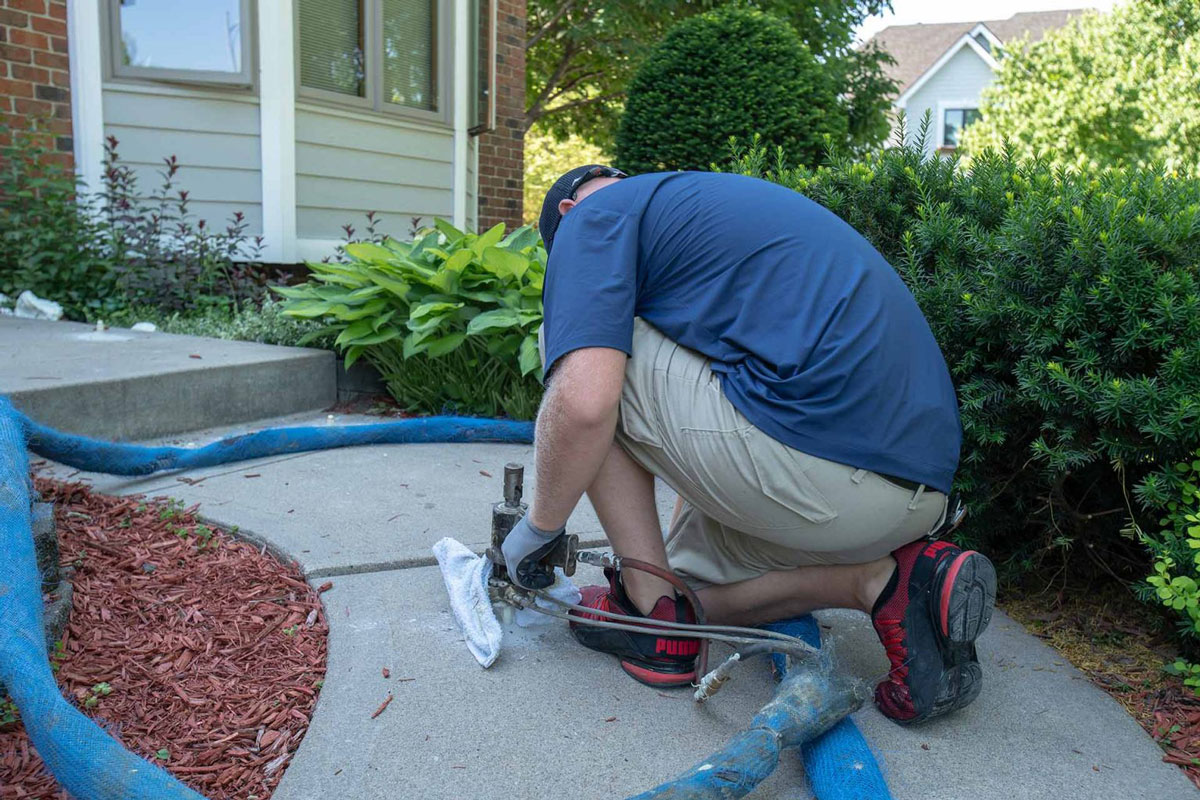
Checking out Polyjacking: How It Functions and Its Advantages
While mudjacking has its merits, polyjacking, additionally called polyurethane foam injection, supplies a modern-day alternative for concrete progressing that boasts several benefits - mudjacking vs polyjacking. This innovative technique uses high-density polyurethane foam, which is infused under the concrete surface area to elevate and maintain it. The foam increases swiftly upon shot, filling voids and offering prompt assistance, which decreases downtime for property proprietors
One of the substantial advantages of polyjacking is its lightweight product, which minimizes the threat of further settling compared to typical mudjacking materials. Furthermore, polyjacking is very immune to water, making it suitable for locations vulnerable to dampness. The fast healing time of the foam permits faster task completion, making it possible for home owners to return to typical tasks almost promptly. In general, polyjacking offers an effective, resilient, and eco-friendly remedy for resolving concrete resolving issues.
Comparing Prices: Mudjacking vs. Polyjacking
When examining concrete progressing solutions, expense is a substantial factor that homeowner must think about. Mudjacking commonly offers a more affordable alternative, usually ranging in between $300 to $1,500 depending upon the project dimension and intricacy. This traditional technique uses a cement-based slurry, which is typically less costly than the products utilized in polyjacking.
On the other hand, polyjacking often tends to be pricier, with prices ranging from $1,000 to $2,500 or even more (BAM Basements). This method utilizes polyurethane foam, which is advanced and needs specific devices for application
While mudjacking may offer a reduced preliminary financial investment, it is important for homeowner to evaluate long-term performance versus in advance prices. Polyjacking, though a lot more costly, can offer toughness and potentially fewer upkeep needs. Eventually, choosing between mudjacking and polyjacking must involve a complete analysis of both future and prompt monetary implications.
Suitability for Different Scenarios: When to Utilize Each Technique
Establishing the suitable concrete progressing approach depends mainly on the specific circumstances of the task. Mudjacking is commonly matched for bigger locations and heavier slabs, such as driveways and industrial sidewalks, where its density and stamina can successfully maintain the concrete and lift. This technique can likewise be a lot more affordable when managing extensive surface.
Conversely, polyjacking is excellent for household setups, particularly for smaller sized tasks and locations with intricate landscaping, because of its light-weight and quick-setting buildings. It is less intrusive and can read guide be completed with minimal disturbance, making it a favored choice for homeowners. Additionally, polyjacking's resistance to wetness makes it appropriate in regions with high water tables. Eventually, picking in between mudjacking and polyjacking calls for cautious consideration of project size, environmental aspects, and the desired result for the concrete surface.
Long-Term Considerations: Durability and Maintenance of Concrete Progressing Solutions
As property owners and building supervisors take into consideration concrete progressing options, long-lasting longevity and maintenance become important consider their decision-making procedure. Mudjacking, which includes the injection of a cement-based slurry, normally provides a life-span of 5 to one decade prior to prospective settling happens. Its maintenance requirements consist of checking for cracks and making sure correct drain to extend its efficiency.
In comparison, polyjacking utilizes high-density polyurethane foam, which is resistant to moisture and does not deteriorate as swiftly as traditional materials. This method can supply a more resilient service, with life expectancies usually surpassing 10 years with very little maintenance. Polyjacking's lightweight nature likewise minimizes stress and anxiety on underlying dirt, even more improving security.
Inevitably, the choice in between mudjacking and polyjacking depend upon a residential or commercial property's particular demands, neighborhood ecological problems, and the wanted long life of the repair service. Comprehending these aspects can guide homeowner towards a much more sustainable concrete leveling solution.
Frequently Asked Concerns
How Long Does Each Leveling Process Commonly Take?
Mudjacking typically takes a couple of hours to finish, while polyjacking can frequently be ended up in less time because of quicker healing times. Both processes rely on the project size and particular conditions existing.
What Are the Ecological Influences of Mudjacking and Polyjacking?
Mudjacking usually uses cement-based products, which can have a higher carbon footprint. On the other hand, polyjacking uses polyurethane foam, usually considered more eco-friendly due to reduced waste and lower exhausts during production and application.
Can I Perform These Methods Myself or Hire an Expert?
Individuals can attempt DIY mudjacking or polyjacking, yet hiring an expert is typically recommended (polyfoam concrete leveling). Specialists have the essential knowledge and devices, ensuring a more efficient and risk-free technique to concrete progressing projects
Are There Any Service warranties or Guarantees With These Services?
Lots of business offer warranties or warranties for their concrete leveling services. These service warranties typically cover workmanship and materials, ensuring customer contentment. Possible clients ought to inquire about specific terms before waging any solution.

Exactly How Do Climate Condition Affect Each Approach's Effectiveness?
Weather significantly affect both methods. Mudjacking might be much less efficient in cool, wet settings as moisture can weaken the mix. Alternatively, polyjacking is much more versatile, often performing well in numerous weather conditions, including chillier temperatures.